For a while, I was using my Godox AD600 battery-powered strobe to light my home studio vlogs — running its bare-bulb setup with the H600 extension. I recorded around 8 vlogs this way before realizing it wasn’t really the right tool for the job.
Why the AD600 wasn’t working for video
The AD600’s modeling light is meant to help you preview flash exposure, not act as a proper continuous video light — and on top of that, the LED itself is partially obscured by the flash tube, so even as a rough guide it’s not great. Using it as my main video light was always a workaround, not a real solution.
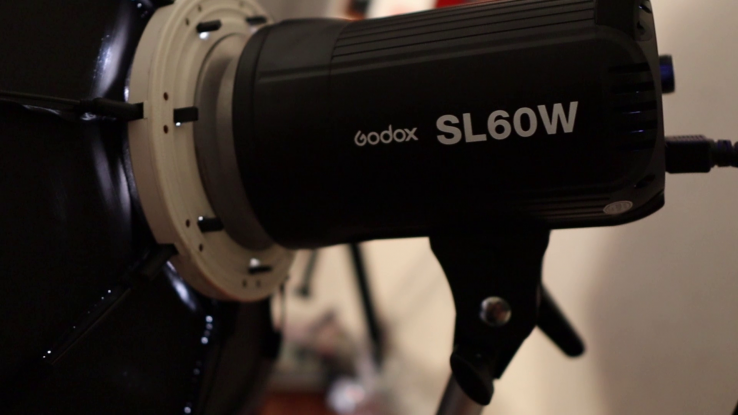
Switching to a dedicated video light: the Godox SL60W
Once I accepted I needed a proper continuous light rather than repurposing a flash, I went with the Godox SL60W — a dedicated LED video light built for exactly this use case.
First impressions
Right out of the box, the difference is obvious: this is a continuous light designed to be looked at directly on camera, not a flash unit’s afterthought. It comes with a back LCD panel for adjusting brightness and settings without guesswork, and it’s genuinely powerful for something in this price range — one of the stronger budget video lights I’ve used.
Continuous light vs. flash-based lighting
The core advantage of a continuous light like this is simple: what you see is what you get. With flash-based modeling lights, you’re always somewhat guessing how the final flash exposure will look. A dedicated LED light like the SL60W removes that guesswork entirely, which matters a lot more for video than for stills.
Worth it?
If you’re recording video and have been trying to make a flash/strobe’s modeling light do double duty, save yourself the frustration — a dedicated light like the SL60W is a much better long-term investment for consistent, video-ready lighting.